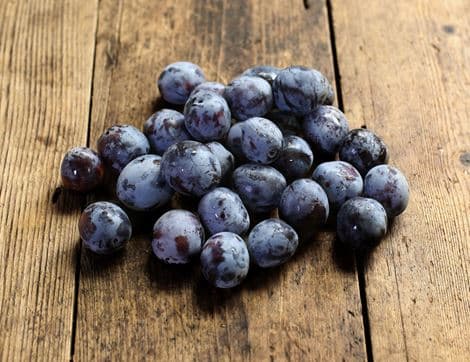
English Damsons (400g)
£4.75
(£1.19 per 100g)
Why?
When you think of nature and all the treats it holds for us, damsons are right up there. These organic, deep purple beauties taste just as wonderful as they look. They’ll make for the perfect batch of jam, as they’re full of sweetness and so very juicy. We wonder how long it will last in your pantry…
Country of Origin - UK
Class - Minimum Class 2
Country of Origin - UK
Class - Minimum Class 2
Read more
Producer
Producer
Geoffrey Barker has tended to the orchards at Brownsfield farm for over 45 years. He started working in the orchards as a young boy helping the farm’s previous owner, and owned his first field when he was just 16 years old. From these humble beginnings the orchards have flourished, as has Geoffrey’s family. He now runs the farm with his lovely wife Clare, supported by their five children Joe, Ben, Rachael, Richard and Helen. Rachael says “Dad hates the wind, the only thing that makes him stop picking is a windy day, and he likes picking in the rain!”.
Ingredients & allergens
Ingredients & allergens
Abel & Cole handles celery, celeriac, peanuts and nuts on site. Due to our packing process and re-use of boxes there is a risk of cross-contamination from these, and all other allergens.
While we do everything we can to ensure the information on this page is correct, ingredients, nutritional and dietary information are subject to change. So along with the information on our website, we always recommend that you read each label carefully before enjoying your items.
Storage & prep
Storage & prep
These damsons are perfect for making jam. Gently simmer in a pan of water until soft, remove the stones, add sugar and boil until reduced.
Don’t forget to wash your fruit and veg before use.