

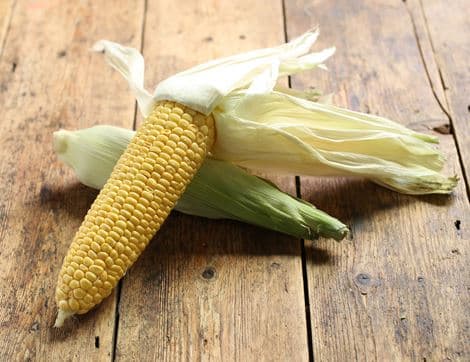
English Sweetcorn (2 cobs)
£3.15
(£1.57 each)
Unavailable
Why?
Take a bite out of organic English sweetcorn. Wrapped in its natural, leafy casing. For a sweet, fresh taste of summer.
What makes me special?
- Each cob is still wrapped in its leafy casing with delicate silks to stay fresh the sustainable way
- Perfect grilled on the barbecue with lime and chillies
- Or simmered on the hob and served with a generous knob of butter
- Organically grown with no artificial pesticides
- Delivered sustainably to your door with as little packaging and as few food miles as possible
- Zero air freight
- Country of Origin – UK, Class – Minimum Class 2
What makes me special?
- Each cob is still wrapped in its leafy casing with delicate silks to stay fresh the sustainable way
- Perfect grilled on the barbecue with lime and chillies
- Or simmered on the hob and served with a generous knob of butter
- Organically grown with no artificial pesticides
- Delivered sustainably to your door with as little packaging and as few food miles as possible
- Zero air freight
- Country of Origin – UK, Class – Minimum Class 2
Read more
Producer
Producer
Our Organic Sweetcorn is grown in partnership with James Foskett and his daughter, Jess Church in East Anglia. Wildlife is an integral element of the ecosystem on Low Farm with mixed flower margins and irrigation reservoirs creating important habitats. James and Jess are passionate about responsible farming practices that support soil health, biodiversity and top quality fruit & veg.
Ingredients & allergens
Ingredients & allergens
Abel & Cole handles celery, celeriac, peanuts and nuts on site. Due to our packing process and re-use of boxes there is a risk of cross-contamination from these, and all other allergens.
While we do everything we can to ensure the information on this page is correct, ingredients, nutritional and dietary information are subject to change. So along with the information on our website, we always recommend that you read each label carefully before enjoying your items.
Storage & prep
Storage & prep
If you need the corn as one ingredient among others it is easier than you think to scrape the grains off. Remove the leaves, and then scrape down, with a knife, as near to the core as possible. To eat as corn on the cob, simply remove the leaves, rinse and then place in boiling water for 8-10 minutes. Sweet corn should be eaten as soon as possible, to avoid all the sugars turning into starch. You should keep it in the fridge in a plastic covering. Suitable for home freezing.
Don’t forget to wash your fruit and veg before use.
Don’t forget to wash your fruit and veg before use.