pork recipes
Here's a collection of pork recipes from our weekly newsletters, and some lovely ones you've sent in. If you'd like more please have a look at our recipe index! To find out about our pork suppliers and order yours click here.
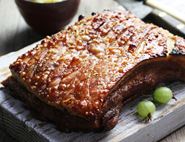
Garlic Roast Pork with Camelised Apples, Onions and Gravy
Ham and Cress Pancake Wraps
Pork with Cardamom Plum Sauce and Gingered Cabbage
Sauteed Ginger Cabbage with Pork and Apple Meatballs
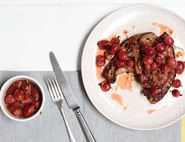
Slow‐Roasted Pork Chops with Rosemary and Balsamic
Chestnut & Sausage Stuffing
How to Cook a Gammon
print page
A gorgeous roast dinner to serve with your favourite sides like mash and steamed cabbage. The servings depend on the size of your pork leg – roast 30 minutes per 1/2kg (450g), plus 30 extra minutes. Allow 100-175g of raw meat per person.
- Pork leg, boned and rolled
- 4-6 garlic cloves, chopped
- 2 tablespoons orange juice
- 1 tablespoon vegetable oil
- 1 tablespoon wine vinegar
- 1 teaspoon each salt and pepper, or to taste
- Fresh rosemary, chopped
- 2-6 eating apples
- 2-6 onions, peeled
- 2-4 tablespoons honey
- 700-900ml chicken or vegetable stock
- 25g plain flour
- 80ml orange juice, or to taste (for the gravy)
Preheat oven to 180°C/350°F/gas mark 4. Pat the pork dry.
with a sharp knife, score the skin and fat of the pork deeply in a criss-cross or diamond pattern. In a blender puree the garlic with the orange juice, oil, vinegar, salt and pepper, and rub the mixture all over the pork. Place on a rack in a roasting tin and roast for the calculated cooking time. 50-60 minutes before the end of cooking, add the apples and onions to the roasting tin, or a separate tray, and drizzle with honey, and some chopped rosemary. After cooking, remove the apples, onions and pork to the carving board, and transfer 2 tablespoons of the fat from the roasting tin to a small saucepan. Pour or scoop off the remaining fat from the pan juices, add the stock and deglaze the tin over high heat, scraping up the brown bits. Add the flour to the fat in the saucepan, and stir for 2 minutes over low heat. Strain the mixture from the roasting tin through a sieve into the flour mixture, whisking all the time. Whisk in the orange juice, and simmer the gravy, whisking, for 5 minutes. Season to taste, and serve.
Wine match: Cotes Du Rhone, France, 2005 (£6.99) - you don’t want too much tannin with pork but the soft tannins in this wine will lift the whole dish. Or, if you prefer white, try the Viognier, Vin de Pays d'Oc, France, 2004 (£8.99). To buy, go to www.abelandcole.co.uk/wine
back to top
A great, quick lunch! Makes 6
Whisk together 150g plain flour, 325 milk and 1 egg. Stir in 30g melted (and slightly cooled) butter just before cooking. Heat a crepe pan or medium frying pan over medium heat. Brush with melted butter. Ladle 2-3 tablespoons of batter into the pan, hold it up and swirl to cover the base. After 1 minute flip it over and cook 30 seconds more. Remove to a plate or board and continue cooking the rest. When finished, spread each pancake with some cream cheese, then add sliced ham and some cress, and roll up into a wrap. Serve cold or at room temp.
back to top
This was an experiment I made other night. I wasn't sure
if cardamom would work with pork, but it does! This serves 2. Pair with buttery
mash or roast potatoes.
- 2 ripe plums
- 1 tbsp Demerara sugar
- A pinch of ground cloves (or 5 whole cloves finely ground)
- 2 pork loin steaks
- 3 cardamom pods
- 2-3 tbsp butter
- 1 tbsp honey
- 1 cm piece of fresh ginger roots, peeled and finely minced
- A quarter of a green cabbage, cut into 1cm-thick ribbons
- Sea salt
- Freshly ground black pepper
Halve the plums, destone and cut into small, 1cm pieces.
Mix with sugar and cloves and set aside.
Remove the black seeds from the cardamom pods and crush until fine in a pestle
and mortar. Rub cardamom into the pork. Add a pinch of salt and a touch of black
pepper and set aside for a few minutes.
While they cook, start your pork - it will take 25 minutes cook. Melt 1 tbsp
of the butter in a frying pan. Once sizzling, add your pork. Cook for 5 minutes
on a reasonably high heat, then reduce to low and cook for 10 minutes. Flip
and drizzle the honey over and touch more butter if it's looking dry. Pile the
plums and the juices and sugar over the pork and cook for a further 10 minutes
on a lowish heat.
Once cooked, melt 1 tbsp butter in a fry pan or wok. Add the ginger, stir and
then add the cabbage. Cook for about 10 minutes, stirring several times and
adding 2 tbsp of water half way through cooking. (Cook this while the finished
pork rests).
Serve with pork and cabbage with buttery mash or roast potatoes.
back to top
In some ways, this is a bit like spaghetti and meatballs, whereby the cabbage acts like the pasta. It’s a simple, lovely, comforting dish. Serves 4
- 1 head of green cabbage
- 500g pack of pork and apple burgers (or 1x500g pack of mince, 100g fresh breadcrumbs, 1 large or 2 small grated apples, sea salt and freshly ground black pepper)
- 1-2 tbsp olive oil
- 100ml Samuel Smith’s apple cider (or apple juice)
- 2 tbsp butter
- 2cm piece fresh ginger root, peeled and finely grated
- 50g pinenuts or walnuts, toasted (optional)
- 30g fresh flat leaf parley, roughly chopped
Holding the cabbage (if you’re right handed) with the core in your left hand, slice the cabbage right through into 1cm rounds. Then, slice these rounds in half to make long, taglitelle-like ribbons. Set aside.
Preheat the oven to 180°C/350°F/gas mark 4.
If using the pork burgers to make your meat balls, simply cut each burger into 8 (or 4-5 if you want larger meatballs), then roll each piece into a ball. If using the mince, mix the pork with the breadcrumbs, freshly grated apple and seasoning. Warm a large oven-proof wok or frying pan. Once hot, add 1tbsp olive oil and fry the meatballs until browned on all sides – add more olive oil if needed. Once brown, pour in the apple cider and pop the pan in the oven to allow the meatballs to cook right the way through – about 10 minutes.
Meanwhile, melt the butter in a large frying pan or other wide-based pan. Stir in the ginger and allow it to meld with the butter for 30 seconds or so, stirring the whole time. Add the cabbage and stir to coat in the ginger butter. Cook for 5 minutes, stirring frequently. Then, add a splash or two of cold water and cook until tender. If using the pinenuts or walnuts, toss in at this stage until fully dispersed throughout the cabbage.
Toss the cabbage in with the cooked meatballs, just so they pick up a tiny bit of the juices from the bottom of the pan – don’t mix, just simply place the cabbage on top of the meatballs. Then, divide cabbage between plates and arrange the meatballs on top. Finish with a good handful of freshly chopped flat leaf parsley and serve with a nice cold glass of cider.
back to top
Gentle, slow‐roasting gives you the most succulent, tender meat, as well as extraordinary flavour. Serves 2
- 2 pork loin chops
- 1 tsp fennel seeds, crushed
- 2 tbsp chopped fresh rosemary leaves
- ½ tsp finely chopped, deseeded red chilli
- 3 garlic cloves, peeled and finely chopped
- 4 tbsp balsamic vinegar
- 1 tbsp olive oil
- Freshly ground black pepper
Remove the pork chops from the pack. Rinse and pat dry. Place the chops in a dish for marinating. Mix the fennel seed, rosemary, chilli, garlic and a good grinding of black pepper in a dish. Rub this mix into both sides of the meat. Sprinkle balsamic over. Marinate for at least 30 minutes, or up to 24 hours. Preheat oven to 150°C. Heat an oven‐proof frying pan over a high flame. Once hot, drizzle in the olive oil. Place the chops in the hot pan. Sear for 3 minutes on one side. Flip over. Pour any remaining marinade into the pan, over the chops. Pop into the oven and slow roast for 1 hour. Allow chops to rest for 10 minutes once they’re cooked. Serve with mash or dauphinoise potatoes and a green leafy salad or new season French beans.
back to top
Stuffing is incredibly versatile, so chop and change as needed! Suitable for all poultry and meat (especially fab with duck) and can be assembled (but not baked) one day ahead and refrigerated. Bring to room temperature before baking (and remember, a good stuffing is a labour of love).
- 1 large loaf of country-style bread (approx 400g),
crust discarded, bread cubed and dried in oven at 100ºC
for 15 minutes (so that it’s nice and absorbent for all the other flavours!)
- 200g sliced bacon, cut crosswise into finger-width pieces
- 3 medium onions, coarsely chopped
- 450g pork sausages, meat removed from casings
- 200ml single cream
- 200ml chicken, turkey or vegetable stock
- 2 eggs
- 400g fresh chestnuts
- 1 handful chopped fresh parsley
- 1 tablespoon chopped fresh thyme
- ½ teaspoon each salt and pepper
To prepare the chestnuts, make slits in their skins and put them in a saucepan. Cover with cold water and bring to the boil over a high heat. Reduce the heat to low and simmer for 10 minutes.
Drain and leave them until they are cool enough to handle, then peel off the skins and crumble the chestnuts.
Cook the bacon in a frying pan over medium-high heat. When it’s done, use a slotted spoon to transfer the bacon to a large bowl. Discard all but 2 tablespoons of bacon fat from the frying pan and use it to sauté the onions over a medium heat, stirring, for about 10 minutes or until they are soft. Cook the sausagemeat in the same frying pan, stirring to break up the sausage, for 10 minutes or until cooked through, then add it to the bacon.
Turn up the oven to 190ºC/375ºF/Gas mark 5. Soak the bread cubes in the cream, tossing frequently, until the liquid is absorbed - about 10 minutes (if you find the bread is sopping with liquid you might want to squeeze some of it out). Stir the bread into the sausage mixture. Blend the stock and eggs, and add them to the stuffing, stir in the chestnuts, herbs, salt and pepper and mix everything up really well. Stuff inside your turkey or other meat, or transfer to a buttered baking dish, and bake for another 20 minutes covered with foil on the top shelf of the oven. Remove the foil and bake for another 20 minutes until the top is crisp.
back to top
These instructions are for gammon (uncooked ham) only since our smoked and honey-glazed hams need no further preparation and are ready to serve!
Additional ingredients:
- 2 tablespoons mustard
- 2 heaped tablespoon brown sugar
- 100ml rum or whisky (optional)
- About 15-20 whole cloves
- Stock herbs and vegetables (optional)
First, soak the gammon to remove some of the saltiness that results from the curing process. You'll need to cover the gammon with water overnight and throw away the water in the morning. Or you can put the gammon in cold water, heat it, and take the gammon out when it begins to boil. Rinse the gammon and replace it in the pot, covering it with fresh cold water. Add a few stock vegetables and herbs (eg 2 carrots, an onion, 3-4 bay leaves, 5-6 sprigs of thyme and 10 black peppercorns) if you like.
Bring the pot to the boil and simmer it very gently for 2½ hours (2kg) or 3½ hours (4kg). After an hour, taste the water: if it is unpalatably salty, get rid of it and replace with fresh boiling water. Half an hour before the end of the simmering time, turn your oven to 180°C/350°F/gas mark 4. Remove the gammon from the pot and allow it to cool slightly. Meanwhile, place the mustard and sugar in a small mixing bowl and add just enough rum, whisky or water to make a thick paste. Carefully cut away the skin of the gammon, leaving a smooth, even layer of fat over the meat.
Place the gammon in a large roasting tin, then score the fat layer with the point of a sharp knife in a coarse diamond pattern. Be careful not to go right through the fat to the meat. Pour any remaining alcohol (if you're using it) over the fat. Spread the glaze mixture all over it in an even layer. Stud the fat with cloves at regularly spaced intervals. Put the gammon in your pre-heated oven for 1-1½ hours, or until the glaze has formed a dark, golden brown, bubbling crust.
back to top